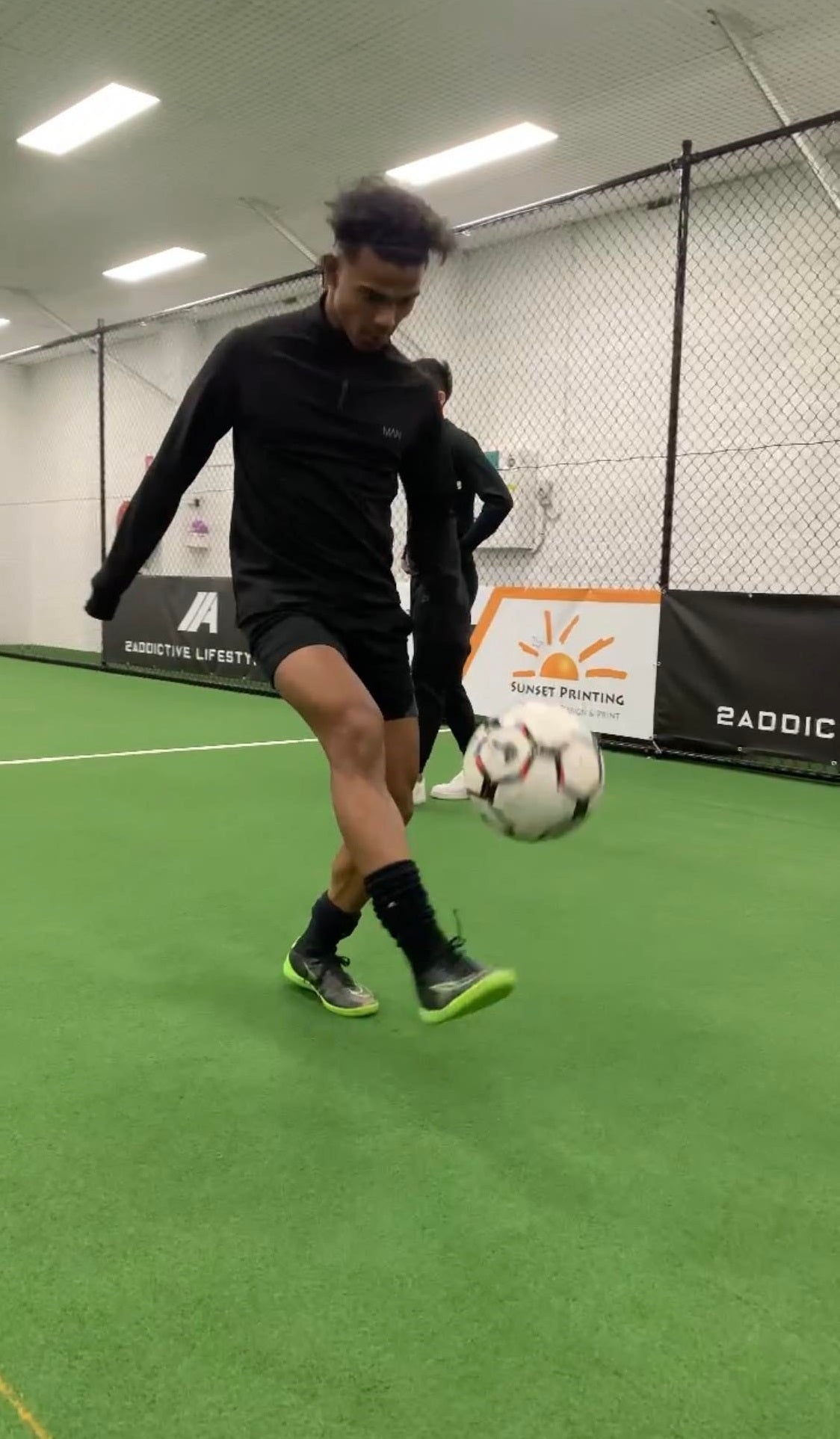

As a parent in Cheltenham / Bayside, you want your child to improve their soccer skills even when they’re not at training. Practising at home with simple, structured drills is a powerful way to boost ball control, coordination, and confidence. The following five soccer drills are age-appropriate for kids aged 5–12 and don’t require expensive equipment — just a few cones (or markers), a ball, and a little space.
Drill 1: Dribble Through the Cones
What It Develops: Dribbling, close control, footwork
Setup:
-
Use 6–10 small cones or markers spaced in a zig-zag pattern
-
Create a course about 6–8 meters long
How to Do It:
-
The child dribbles the ball through the cones with light, controlled touches.
-
Change the dominant foot (left/right) every few runs.
-
Increase challenge by narrowing the spacing or timing them for speed.
Coaching Tips:
-
Encourage “soft touches”: not heavy kicks.
-
Emphasize using both feet equally.
-
Make it a game: time each run; try to beat previous times.
Drill 2: Wall Pass & Return (or Rebounder)
What It Develops: Passing, first touch, awareness
Setup:
-
Use a wall (or a rebound board)
-
Mark a small target spot on the wall if possible
How to Do It:
-
Child passes the ball toward the wall, then receives the return.
-
Vary the distance, force, and angle of the pass.
-
After the pass, use the dominant foot to control the rebound, then pass again.
Coaching Tips:
-
Focus on weight and accuracy of the pass.
-
Encourage using the inside of the foot for precision.
-
Progress by using one-touch returns (if they're ready).
Drill 3: First-Touch Control Circle
What It Develops: First touch, body control, balance
Setup:
-
Use 4–6 cones to form a small circle (diameter ~3 m)
-
The child stands in the centre with the ball
How to Do It:
-
Parent or partner passes the ball into the circle.
-
The child receives the ball, then plays it back out with one touch or two touches.
-
Vary the type of pass: ground pass, lofted pass, or bounce.
Coaching Tips:
-
Encourage soft, controlled first touch.
-
Focus on receiving with different parts of the foot (inside, outside, instep).
-
Challenge with higher or faster passes once they’re comfortable.
Drill 4: Shooting Target Practice
What It Develops: Shooting accuracy, both feet, composure
Setup:
-
Use a small goal, or set up two cones as a “mini goal”
-
Mark a shooting line a few metres out
How to Do It:
-
The child dribbles or moves to the shooting line.
-
They attempt a shot at the target (cone or goal).
-
Encourage alternating feet, different kinds of shots (instep / laces / side-foot).
-
Track number of goals / attempts to make it fun.
Coaching Tips:
-
Remind them to look up before shooting (to aim).
-
Encourage accuracy over power for younger kids.
-
Celebrate every goal to build confidence.
Drill 5: Footwork & Agility Ladder (or Imaginary Ladder)
What It Develops: Agility, coordination, balance
Setup:
-
If you have an agility ladder, use it. If not, mark an “imaginary ladder” on the ground with tape or cones.
-
Ladder length: about 3–4 metres with 8–10 “rungs.”
How to Do It:
-
The child runs through each “rung” with various footwork patterns: two-feet-in-each, single-step, lateral side-steps, etc.
-
Add a ball for more challenge: dribble through while doing footwork.
-
Time them for fun, or have them repeat patterns in sequence.
Coaching Tips:
-
Teach them to keep their knees slightly bent and stay light on their feet.
-
Encourage control — don’t rush, especially with the ball.
-
Gradually increase difficulty (speed, foot pattern) as they improve.
Structuring a 20-Minute Home Practice Session
Here’s how your child can combine these drills into a short, effective session:
-
Warm-Up (3 min): Light jogging, side-steps, ball touches.
-
Technical Circuit (12 min):
-
Dribble Maze: 3 runs
-
Wall Pass & Return: 4–6 passes
-
First Touch Circle: 5–6 touches
-
-
Shooting Practice (3 min): 8–10 shots from different angles / feet
-
Agility Ladder (2 min): footwork sequence with or without the ball
Safety & Equipment Tips
-
Use a soft or size-appropriate ball (size 3 or 4) for younger kids.
-
Choose a flat, safe surface (grass, turf, driveway) — avoid slippery or uneven ground.
-
Make sure the space is clear of obstacles (furniture, toys, pets).
-
Always have water nearby and encourage your child to take breaks.
Tracking Progress
To make it engaging and measurable:
-
Use a practice sheet: record times, number of successful passes, goals scored.
-
Set weekly goals (e.g., “Beat your time by 10%”, “10 perfect wall passes”).
-
Celebrate achievements: small rewards like stickers, or extra “free kick” time.
Why These Drills Help Your Child Grow as a Soccer Player
-
Builds strong foundation: These drills develop critical skills — dribbling, first touch, passing, shooting — which are essential in every game.
-
Creates muscle memory: Repeating these patterns at home makes movements more natural on the pitch.
-
Boosts confidence: When kids see their own progress, they feel more capable and motivated to train.
-
Complements structured coaching: These drills pair perfectly with our 2Addictive Lifestyles training sessions, allowing what they learn in our programs to translate into self-led improvement.
Call to Action
Want to get your child training in a supportive, high-quality environment? Book a session at 2Addictive Lifestyles Training Centre today. We run small-group junior classes, holiday camps, and 1-on-1 coaching — tailored for kids in Cheltenham, Bayside, and surrounding areas.
https://2addictive.com.au/pages/indoor-soccer-bayside-programs
FAQ (Schema-Ready)
Q: How often should my child do these home drills?
A: Ideally 2-3 times per week, depending on how many structured training sessions they already attend.
Q: Do they need special equipment?
A: Not necessarily. Basic items like cones, a ball, and a small target (like a wall or mini-goal) are enough. For agility drills, an agility ladder helps but isn’t essential — you can mark a ladder on the ground.
Q: What age are these drills suitable for?
A: These drills are designed for kids aged 5–12. You can scale the difficulty by changing distance, speed, or how you pass or dribble.